How Biophilic Design Today Is Shaping Tomorrow’s Workspaces
A more human-centric approach has driven the rise of biophilic design, integrating natural elements into the built environment to improve occupant health and wellbeing.
Many modern workplaces are embracing design approaches that create a noticeably different atmosphere. There’s a softness to the acoustics, a warmth to the materials, a visual calm that feels less corporate and more human. This isn’t a passing trend. It’s the influence of biophilic design, a movement that is shaping how architects create the places where people spend much of their time.
Nigel Oseland, an environmental psychologist and workplace strategist, has spent decades researching how design impacts human behaviour and performance. As an author and advisor on workplace environments, he has seen biophilic principles move from theory into mainstream practice:
“Biophilic elements have become standard in many design briefs.”
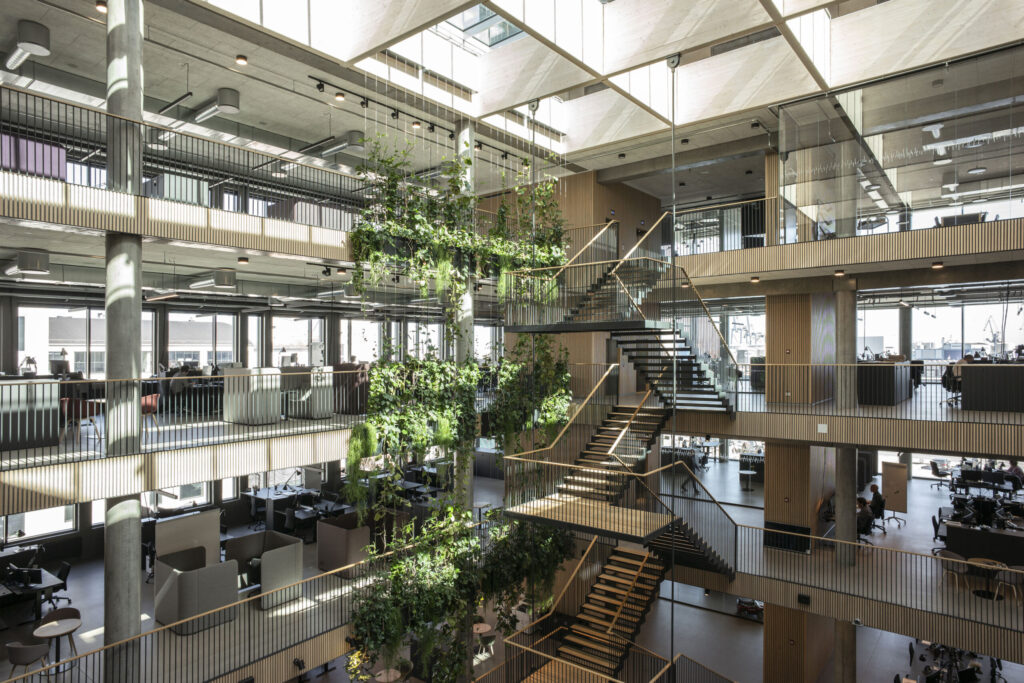
Photo: Helene Høyer Mikkelsen, architect
From integrating natural materials and organic forms to specifying acoustic systems that mimic the softness of outdoor soundscapes, these choices are shaping spaces that feel restorative and intuitive. Today, design teams are aligning these principles with evidence-based metrics such as NRC and reverberation time, ensuring that biophilia is not just beautiful—but functional and certifiable.
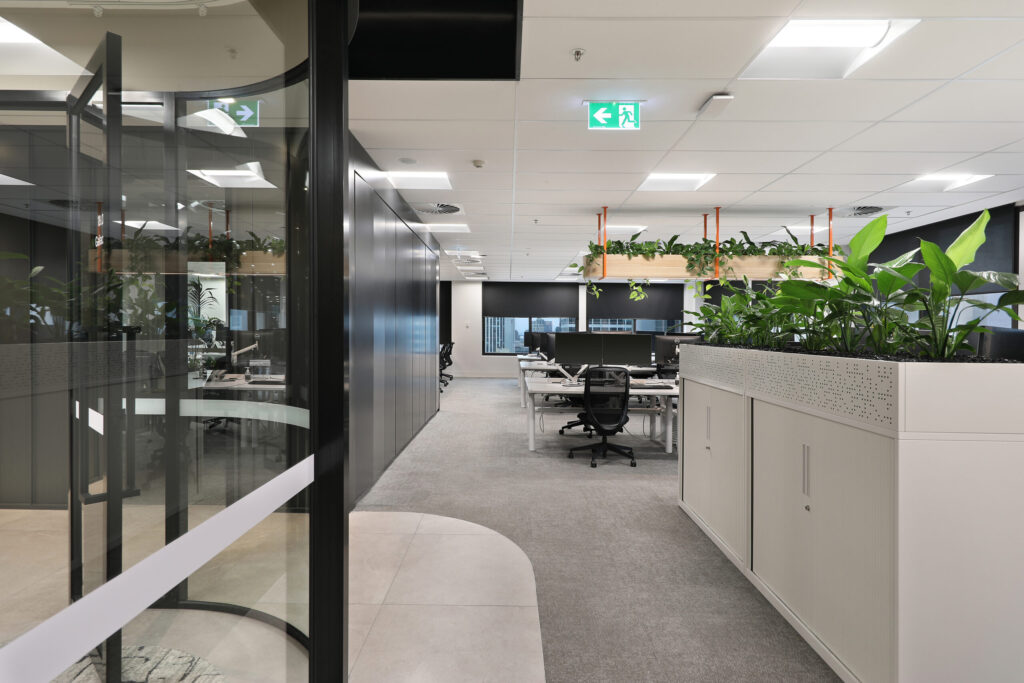
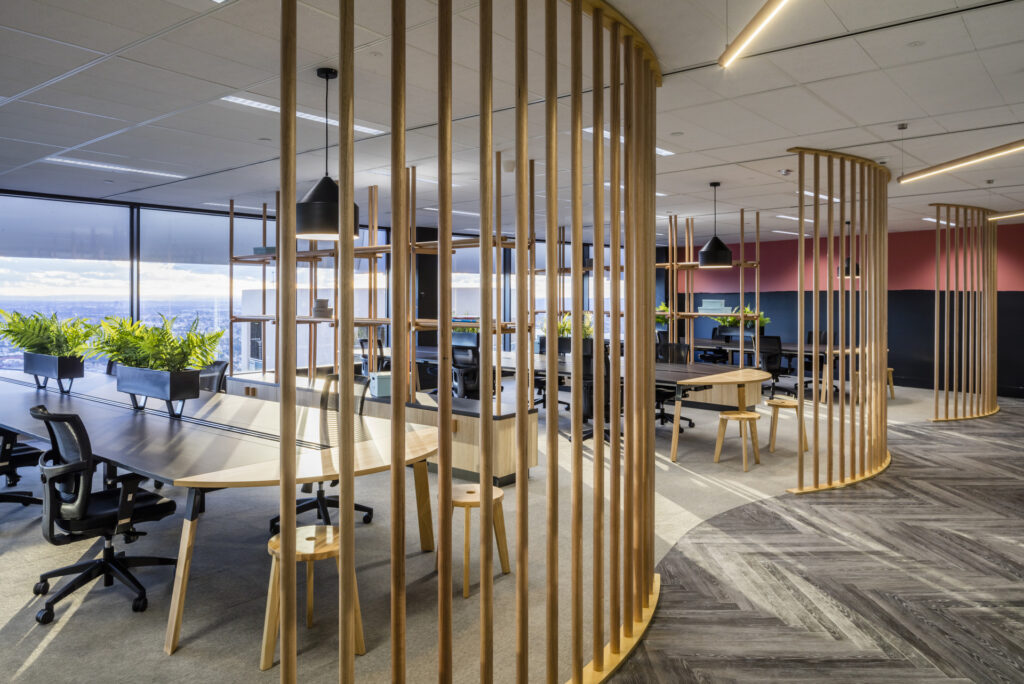
Arcadis Offices in Melbourne
Biophilic design lets nature back in
Humans share an innate affinity with nature. It’s why we gravitate toward natural light, organic textures and open views. In the workplace, this instinctive response has powerful implications. Oseland notes that bringing nature indoors “can help people relax, re-energise, and enhance creativity,” an effect now backed by years of environmental psychology research.
Biophilic workplaces – can contribute to improved wellbeing and performance, enhanced creativity and focus, and reduced stress and absenteeism. When design is guided by nature, spaces feel calmer, clearer and more intuitive, supporting people to do their best work.
Crucially, this isn’t about silent offices. It’s about balance. Spaces for deep focus. Spaces for collaboration. Like nature itself, it’s a well-tuned soundscape that helps people instinctively understand how to use each space and work at their best.
“We like the kind of sound level you’d experience in a natural environment,” Oseland explains. Mimicking those qualities indoors is one of the most effective ways to reduce stress.
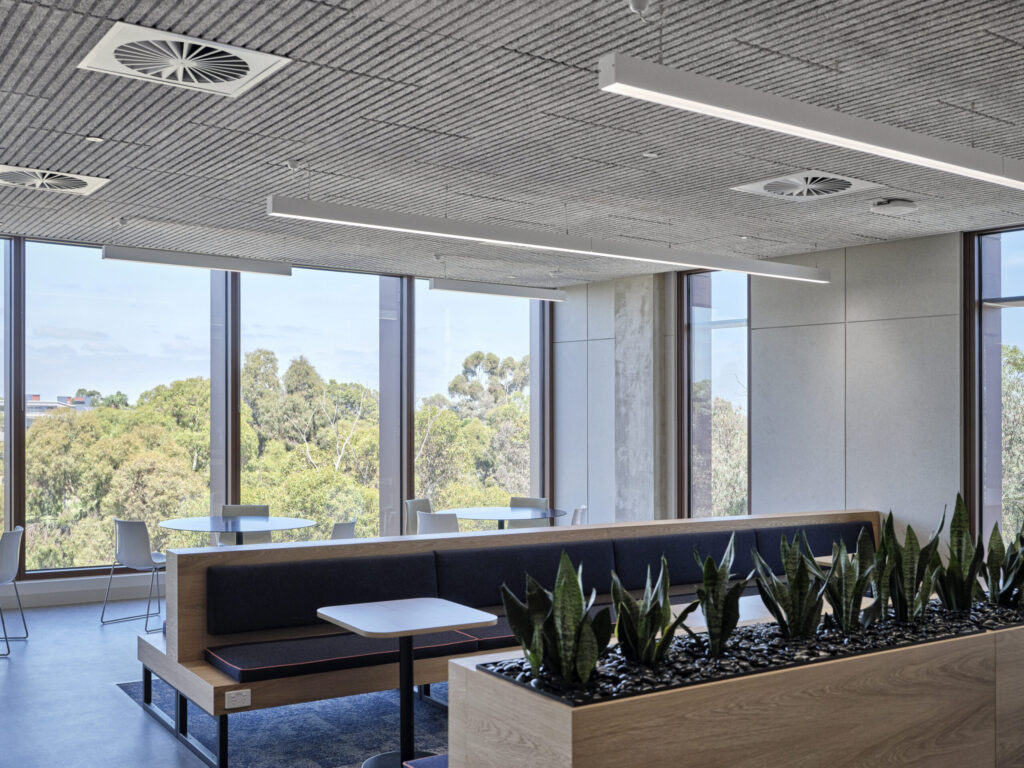
Not just how it looks and feels
A biophilic workplace is defined by its sensory harmony. It’s the quality of daylight that shifts gently across a room, the tactile presence of timber, the subtle layering of soft shapes and botanical forms, the quiet reassurance of seeing greenery or nature-inspired imagery.
Plants, moss walls and broad-leaf foliage help break up sound and workplace bustle. Curves and organic silhouettes soften the hard geometry of open-plan floors.
But perhaps the greatest transformation happens acoustically. – Noise control is critical in open-plan office environments. Incorporating principles such as acoustic zoning, reverberation targets and the inclusion of sound-absorbing surfaces early helps architects balance collaboration and focus areas.
Spaces incorporating biophilic principles often aim to create a calmer atmosphere by using materials that absorb and disperse sound in ways inspired by natural environments.
This harmony of materiality, acoustics and spatial flow is what makes the new generation of workplaces feel less like “offices” and more like environments for thinking, making and collaborating.
Which materials are helping to support this shift?
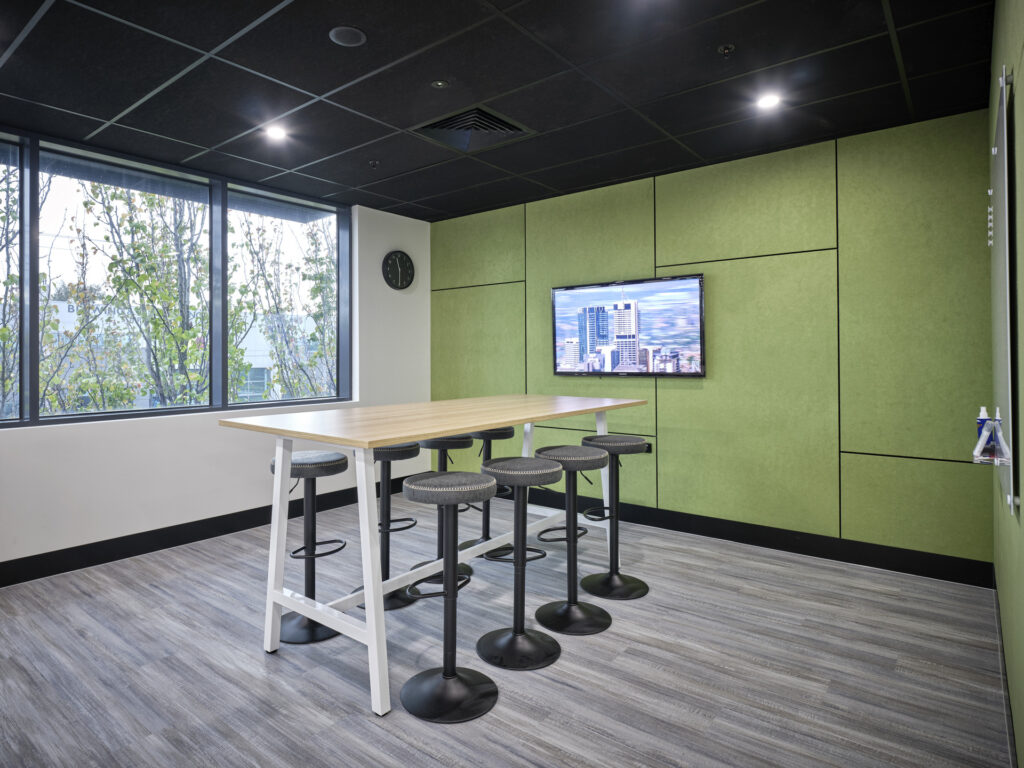
Troldtekt Wood Wool Panels
One of the most interesting materials in biophilic design is Troldtekt wood wool, a natural product that brings a raw, organic character into interiors. The texture alone has a grounding effect, offering the visual warmth of timber without the maintenance challenges.
Troldtekt® wood wool acoustic panels (ceiling or wall): cement-bonded wood wool with natural texture and high absorption potential. Depending on build-up and installation, NRC values from 0.50 up to 1.00; selected systems achieve Group 1 fire rating to AS 5637.1. Troldtekt panels carry FSC/PEFC options and Cradle to Cradle certification. Learn more – https://himmel.com.au/product/troldtekt/
Troldtekt panels aim to meet both the emotional and functional aims of biophilic design—embodying Oseland’s idea of “using natural materials, shapes from nature, mimicking nature in whatever way you can.”

Photo: Helene Høyer Mikkelsen
Ecophon Acoustic Ceiling Tiles
Ceiling design is increasingly central to creating biophilic atmospheres. Ecophon’s acoustic ceiling tiles allow architects to sculpt environments where light is softened, sound is calmed, and the ceiling plane becomes a gentle visual anchor rather than a glare-heavy surface.
Ecophon® Focus A/E acoustic glasswool ceiling systems delivers a typical NRC 0.85–0.95 depending on edge and plenum, supporting Class A absorption. Useful where demountability, hygiene and light diffusion are important.
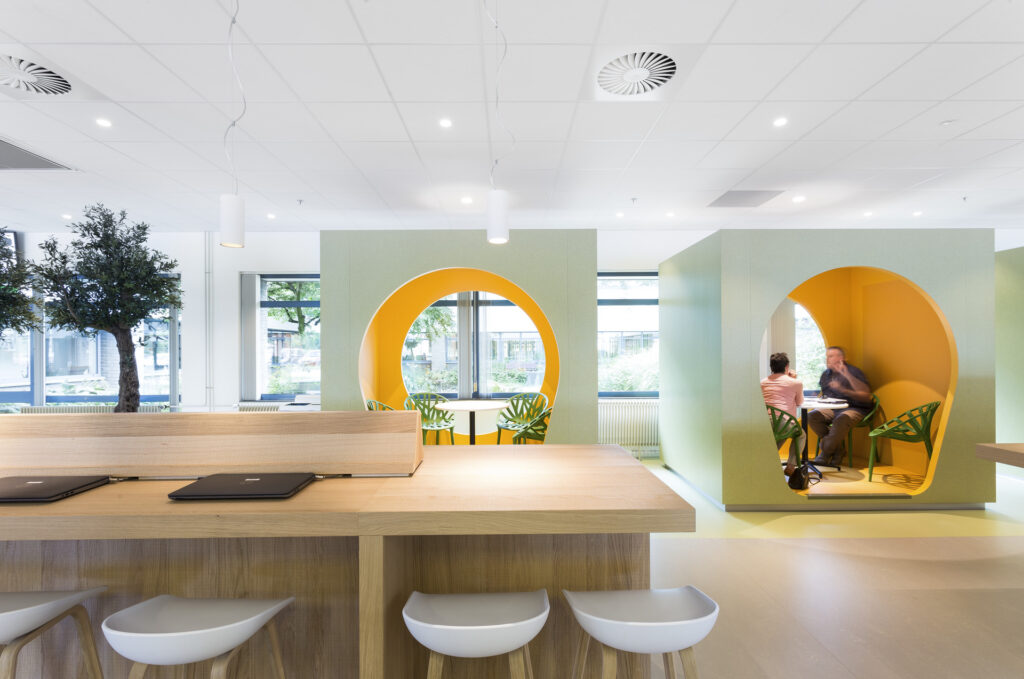
Photo: Saint Gobain
Martini’s Modular Partitioning Systems
As workplace layouts continue to evolve, flexibility has become as essential as material selection. Martini’s modular partitions give architects the ability to create zones, quiet areas and collaborative pockets without sacrificing openness. They support the ebb and flow of teams while contributing to natural acoustic balance and a soft visual rhythm.
CSR Martini® polyester absorbers (e.g., Absorb, Soffitt): broad range of densities/thicknesses to tune absorption; NRC values published up to ~1.05 (HD 75) depending on configuration. Selected variants demonstrate Group 1 compliance to AS 5637.1, with third-party environmental declarations. Ideal behind perforated linings, in baffles, or within partitions.
Fricker Aluminium Ceiling Grid
Designed for workplace commercial office applications, Fricker’s modular aluminium ceiling grids give architects the flexibility to shape calm, functional ceiling spaces without visual clutter. Highly customisable, Fricker provides the structure that lets biophilic and acoustic design perform at their best.
Designing for performance and experience
Acoustic detailing is where design intent meets measurable performance. Beyond aesthetics, these decisions influence comfort, clarity, and compliance with frameworks like WELL and Green Star. By planning early and integrating solutions holistically, architects can ensure spaces sound as good as they look.
- Plan for acoustic zoning early: separate collaboration zones from focus areas; coordinate partitions, ceilings and doors as one system.
- Target Reverberation Time appropriate to use (meeting, focus, collaboration) and confirm with calculations.
- Combine ceiling absorption with wall treatments or high-surface-area elements (e.g., shelving with soft contents, curated planting) to avoid over-reliance on one plane.
- Use modular grid systems to keep services accessible and enable easy upgrades without compromising acoustic coverage.
Where architects are taking biophilic design next
Biophilic design is not just for tasks, but for experiences. For collaboration. For movement and renewal. They feel restorative rather than draining. Biophilic design has become the foundation for this shift—but it’s the materials and acoustic systems that bring these spaces to life.
Troldtekt, Ecophon and Martini offer solutions designed to help architects create spaces inspired by nature, environments that feel intuitive and human centered.
The place to go before you start
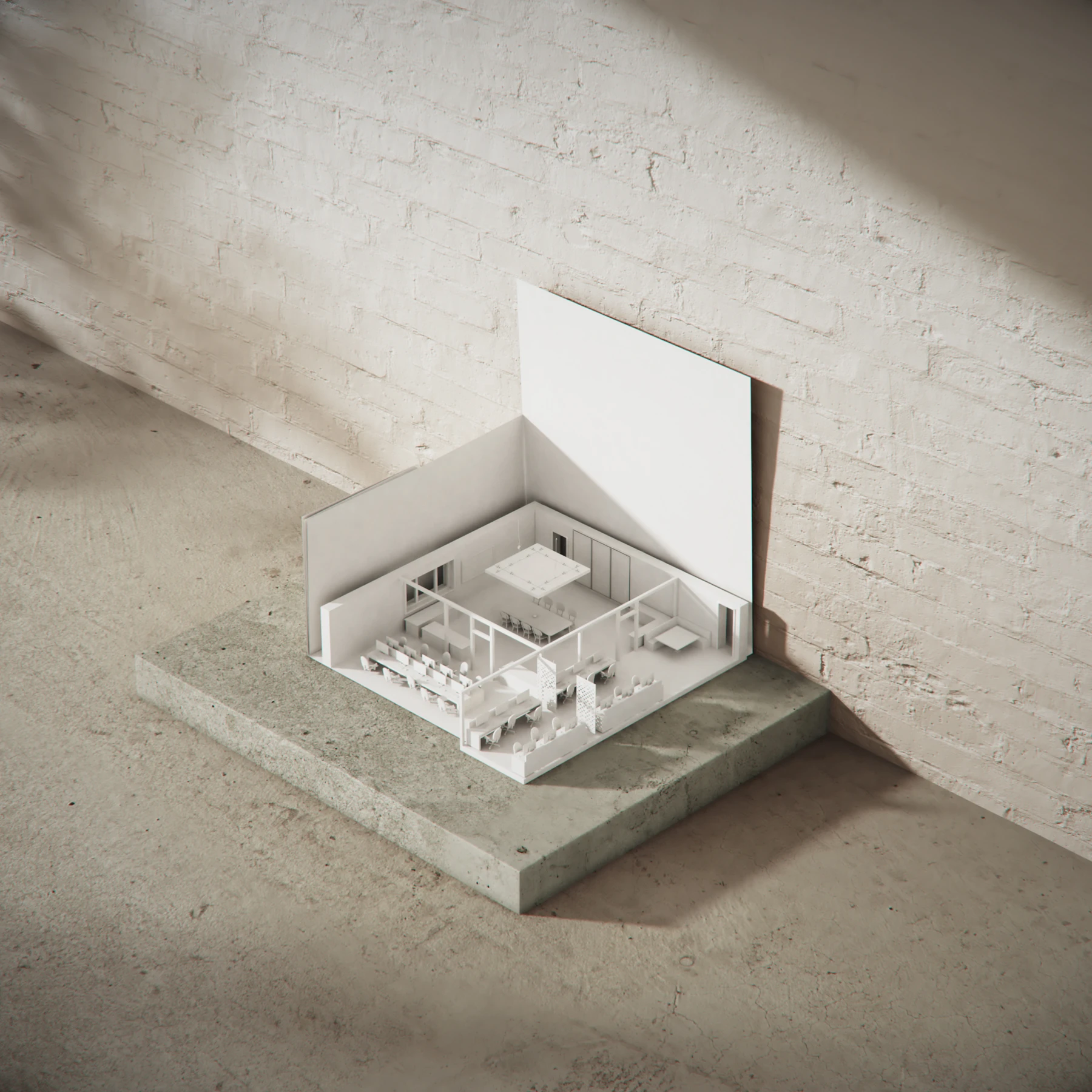
For architects looking to integrate biophilic principles into new or existing workspaces, Himmel’s design team is the place to go before you start.
You’ll get hands-on collaboration that spans refining acoustic strategies to selecting the right material palette. Their expertise helps ensure every environment is not only beautiful and human-centred, but also durable and high-performing in the long-term.
Nature may be timeless, but biophilic workplace design takes a leaf from nature’s book to help us rediscover what makes people feel happy, healthy and productive at work.